Monday, February 28, 2011

Neuro psychology of king’s speech

Stuttering is a speaker’s way of overcoming a timing deficit in the muscles that control speech vocalization. It’s enough to make the natural delivery of speech somewhat less than automatic. Like trying to ski and think about it at the same time, deliberation interferes with the fluid motion required to speak fluently. Stutterers try to compensate for this by rushing the process and speaking faster. They quickly exceed the capacity of the speech delivery system, which makes them either freeze-up or produce the same sound repeatedly. This happens when speech signals from the brain arrive at the system too quickly. Congestion occurs and access is momentarily denied. However, the system was already triggered to proceed ..so it starts uttering the last sound available, if any.
Most speech therapists use some form of ‘auditory feedback’ to impart a sense of timing to the delivery of speech. This involves a device with a pair of headphones that delays the feedback of speech and creates like an echo. It’s intended to help stutterers overcome the urge to speak too quickly and focus on smooth and continuous phrasing. The echo persists until the speaker begins to slow down and ‘close the gap’. As they slow down, the delay is shortened until their speaking voice and the echo are heard as one sound. Over several sessions, this technique helps the person master a pace that approaches the natural rhythm of speech.
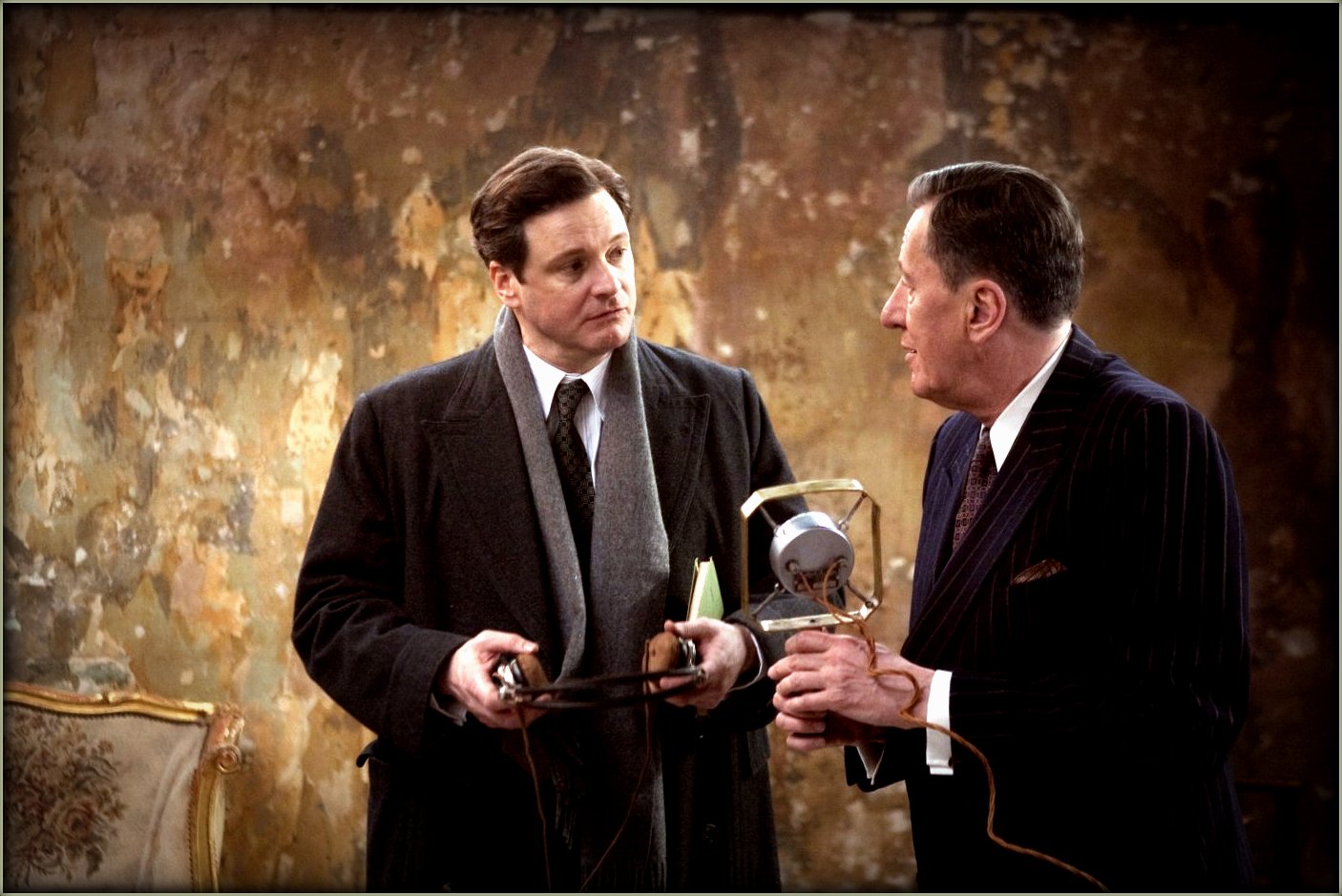
In the movie ‘The King’s Speech’, the therapist first used a pair of headphones to completely block feedback by playing symphonic music instead. It wasn’t intended to treat the problem but to show the King that fluent speech was possible. Although the King dismissed it as a parlor trick ..it worked because it denied him access to what he was saying so he couldn’t speak and think about it at the same time. He only knew it worked later on in the story when he listened to the recording that his therapist had made during the session. His speech was near perfect and it’s what prompted him to continue therapy.

Friday, February 25, 2011

Neuro speculation: Egypt

The amygdala is an almond-shaped mass of gray matter deep inside the cerebral cortex that plays a central role in self-control. It helps keep emotional expression in-compliance with culturally accepted norms. When damaged, an individual has difficulty with impulse-control and restraint from inappropriate and aberrant behavior [link]. Over the past decade, research has uncovered a lot more about the amygdala and how it processes signals from our social environment [link].
I have a theory. I believe that some social signals affect the amygdala differently than others. Some elicit greater restraint and vigilance while others offer release from conditioned restraint and vigilance. Neuroscience informs us that when the amygdala is surgically removed, animals show signs of inappropriate affect ..boredom where there should be fear and hypersexual activity where there is no enticement [link]. I predict that if you housed a normal group of animals where they could watch the frenetic activity of the amygdala-impaired group ..they too would show signs of inappropriate affect. Observation alone would induce the same effect as impairment. MRI studies already show heightened activity in response to authority and perceived threat. I believe they would reveal another type of activity in response to collapse of authority and diminished threat. My theory says that the amygdala would then act to release spectators from conditioned inhibition and give license to repressed impulses and sexual aggression.
This may explain the high incident of sexual assault committed by revelers celebrating the downfall of President Mubarak in Egypt [link]. Festivities associated with a break in the social order released a frenzy of predatory sexual behavior in a few that quickly spread to other participants in the crowd. Predatory behavior of this sort has also been observed at soccer matches and in crowds celebrating at the Rose Parade in California. I believe that lowered internal restraints coupled with the lax enforcement of sexual harassment laws in Egypt may have contributed to the chain of events observed. By no mean am I offering excuses for what occurred, I’m only trying to draw a possible connection between real-world events and accounts of aggression reported from the lab.
My heart goes out to the CBS correspondent who fell victim to it.

Monday, February 21, 2011

Rational Charlie

I admit, I don’t subscribe to a rational model of man. I believe we’re hybrids. Part logic, part emotion, part visual, part verbal and part many other qualities, some of which we don’t even know. We make our way more by heuristic than analytic reasoning. Most of our brilliant discoveries have come from seeing the relationship between vague and loosely connected ideas. Albert Einstein, for example, came up with his theory of relativity only after letting his mind wander [link]. The real world is multi-dimensional and sloppy by nature.
That’s why I had to cringe last night during dinner. Charlie has an insatiable need to be right and a contentious way of dismissing anything to the contrary. In addition, he holds people to standards that no one can meet, not even himself. He scrutinizes other peoples’ speech for statements that he can prove false ..and then points them out as though they’re character flaws. This can lead to some pretty rough exchanges. For instance, when I heard Cindy say “I am moved by things I don’t understand.” Charlie responded “What things, specifically? ..and how can you be moved by something you don’t understand..?” I felt her statement rang true. We’re all creatures of appetite and don’t always act with perfect information. However, I felt Charlie was suggesting “you’re a fool for not behaving in a more rational manner.” Later on in the evening I heard her say “As desires enter me, a picture is formed in me as to what will answer that desire.” Charlie goes “Too passive. You say ‘Desires move into me’. Lacks responsibility of a choice. Furthermore, a picture is non-verbal and external to one’s true nature.” For some reason that’s where I felt compelled to intercede. “Just because she’s speaking in a passive voice doesn’t mean she acting in a passive manner, Charlie. Besides, visualization is primary to human nature while language is subordinate to it. Why do you think the graphical interface made Bill Gates a billionaire ..?” Now he tells me he was trying to impress the lady and I blew it for him.

Monday, February 14, 2011

The Grammys

I think growing up listening to the Rolling Stones has shaped by nervous system and left a definite imprint on my brain. I’m talking like, a specialized location dedicated to their music with channel-direct connections leading to it. Only takes a couple of cues, like the opening chords of ‘street fighting man’ to instantly activate the rest of the song. I experienced this last night while Mick Jagger was only mouthing the words “I need you you you ..” at the end of his performance during the Grammys. I swear I could hear his voice loud and clear just watching him do that ..even with the thundering sound of a sterling, multi-piece back-up band.

Saturday, February 12, 2011

Egypt

“In a way previous generations could never have imagined, young protesters have brought down a dictatorship. If previous revolutions had been hatched in mosques and smoky cafes, this one was hatched online by computer geeks” [link].

I do believe the prophesy of the Electronic Frontier has been fulfilled [link]. Information technology can be used as a force for political change and democracy. In 1991, Soviet youths brought down the USSR using camcorders with satellite uplinks. Now an educated generation of Egyptians has brought down Mubarak using laptops connected to the Internet. That’s brilliant. They were able to bypass traditional lines of communication, which were shutdown by the government, and quickly deliver their message to a cross-section of the population. I admire Wael Ghonim, the young Google exec who helped organize the protest. To the best of my knowledge, this is the first time in history that a revolution, overthrowing a long-standing government, has been spread over the Internet ..successfully!

Wednesday, February 9, 2011

An illusion

“In the west we tend to project or own notions of mystique and tranquility on Buddhist practice. In reality there’s a lot of acrimony and fighting going on in the monasteries.” ~ Erik Curren [link]

I agree. Buddhists are subject to feelings of hostility and aggression same as everyone else. A book by Rossi Jiyu-Kennett who spent eight years in a Japanese monastery is illustrative [link]. However, I believe there is a difference between Western and Buddhist notions of ‘fighting’. When a practicing Buddhist fights, they are fighting – mindful of the decision to fight – aware of what interpretation brings to the battle – and knowing full well that the real enemy is interpretation. They don’t believe in such things as good or bad fights ..only consequences. And interpretation obscures consequences. In fact, it’s probably the villainy of interpretation that got them into conflict to begin with. I’m reminded of a parable zen master Perry once told us. I call it ‘the battle of evermore’ because I don’t remember the actual title. Nor do I remember the exact words, so I can only paraphrase. It goes something like this:

The battle: One sentient being, unable to escape the cycle of reincarnation, is locked in perpetual battle with a ferocious beast from hell. After many lifetimes of this, he throws down his sword in disgust and says “Enough! I can no longer fight like this.” Suddenly the illusion of the ferocious beast vanishes, the barricade of defensiveness crumbles and the endless cycle of battle ends.

Tuesday, February 8, 2011

Big time

There are fewer ‘big acts’ in music out there these days. The Internet has freed the airwaves and given our ears access to a much larger pool of talent. So what we have now is a greater number of acts connecting with smaller audiences. I’d say the music market has definitely become ‘differentiated’. Fine with me ..I’ve gotten weary of going to the LA Coliseum. For concert promoters however, this means a lot of empty seats. Last year headliners such as Rihanna and the Jonas Brothers canceled stadium gigs due to lower than expected ticket sales. So, big concert promoters such as Nederlander responded by raising ticket prices to make up for the difference. Online start-up ‘ScoreBig’ responded by discounting tickets to fill the empty seats. I think that’s brilliant! Definitely a more compelling reason to see a show. Like the record industry, I think the old-style concert venue is doomed. Artists are aware of this. I see them playing in places like the House of Blues more often now. And as far as promotion is concerned ..I see artists taking that bull by the horns as well and posting events over the Internet. Make friends with any of them on myspace or facebook and you’ll see what I mean.

Monday, February 7, 2011

Smells like teen spirit

“High school is closer to the core of the American experience than anything else I can think of.” – Kurt Vonnegut Jr.

When I hear someone in position of authority say “I’m going to rigorously enforce [this particular law] because, without laws ..we’d be a country of anarchy” – then I watch them go out and prosecute offenders in a manner that’s way out-of-proportion to the offense – I don’t believe they’re really acting out of fondness for the law. They’re acting out of aggression that is typical of teenagers climbing the social network in high school or adults climbing the hierarchy of power in politics.

Last year, LA Dist Atty Steve Cooley waged sudden war on marijuana dispensaries because they were accepting cash instead of trading in goods and services. Apparently the law didn’t spell out an exact currency and the term ‘co-op’ could be interpreted to mean a system of barter. Turns out he was planning to run for Attorney General of California.

Arizona Sen Russell Pearce and Kris Kobach co-sponsored Arizona SB 1070 giving police the authority of INS agents to detain Hispanics where the sole probable cause is “..looking illegal.” This certainly is a subjective cause, prone to the bias of a police officer with no training as a federal immigration officer. To me, it’s the same as detaining someone on suspicion of dealing drugs because their hair’s too long. Turns out both sponsors have political ambitions. Kris Kobach is running for Secretary of State in Kansas and Pearce plans to run for president of the Senate and someday hopes to get elected Sheriff of Maricopa County.

Last week Orange County Dist Atty Tony Rackauckas decided to file criminal conspiracy charges against a group of UCI students who protested a speech on campus last year. They face both six months in jail and, as felons, diminished prospects for the future over a nonviolent protest, which may have been rude, but certainly not criminal. I suspect that Rackauckas is also seeking higher office.

Thursday, February 3, 2011

Cosmic Charlie

It is well known that the matter, making up the tissues of our body, is in a perpetual state of decay and replenishment. We are not the same cellular material we were the week before. What I want to know is what kind of ‘blueprint’ do these ‘replenishment cycles’ follow ..? What keeps me from dissolving into the atmosphere at the end of the week ..? It only makes sense that some sort of ‘cosmic memory’ exists to pass information from one replenishment cycle to the next. Because what I’ve been told, even the scaffolding gets demolished. While it may be incomprehensible to me, I refuse to dismiss it. Since I have no basis for it, I have to start somewhere familiar.

Embryonic journey: It is well known that the cells of our body already contain information about their destiny. Genetic material guides embryonic development from one generation to the next. Even this was a mystery until the discovery of ‘epigenetic memory’. The contents of epigenetic memory (epigenomes) are what persist in order to tell chromosomes how to express the characteristics of our ancestors. You erase epigenetic memory and you have ‘equipotentiality’ ..the ability start fresh and be whatever you want to be. Anyway, it wasn’t until we had a set of ‘seer stones’ that we could actually sense the presence of epigenetic memory (it resides in deep layers of DNA, at what are now called the sites of telemere and centromere). I hope someday we acquire a set of similar stones to penetrate the mystery of cosmic memory.

Monday, January 24, 2011

Charlie

Charlie was convinced aliens were following him disguised as policemen. It was part of plot to take over by snatching people one at a time. He hasn’t seen his friend Michael since the night of his DUI arrest. Charlie managed to bolt out the passenger door, but it was close. Tonight he decided he’d been waiting, crouched in fear, long enough. He got in his truck and, with the stereo blasting, circled the neighborhood trying to flush ‘em out. When an officer arrived Charlie successfully outmaneuvered the unsuspecting alien with it’s own gun, then called 911 for reinforcements. But it was a trick and a whole regiment of aliens showed up instead. That’s when he knew it was Armageddon time. He took off his clothes, sat on the pavement, looked up and patiently waited for rapture to come and take him away from there.

Thursday, January 20, 2011

Cosmic zone

Dawn is breaking on the continent of Capella. Overhead, the star of Davriel is still visible in a purplish blue sky. A meteorite trail flashes by. Sallareä bows her head in homage to all she does not know. She’s unaware that, momentarily, what she does not know will be paying homage back. Flickering particles of crystal enter a sector of Sallareä’s narrative-space. Passing through the prism of her senses, an apparition emerges. Sallareä sees a constellation of linked images that, to her, resembles a mandala. It has a message. Whoever this presence may be is telling her that everything is OK and would like to know if they can join her narrative-space and play.

Wednesday, January 19, 2011

Google

The Internet is like an anarchist state. No one is in charge and everyone can contribute. That’s how it should be. It puts everyone in charge of what comes and goes by a democratic process of selection. What is of interest to the most rises in visibility and what is of interest to the fewest decreases in visibility. It’s still available but mostly to the interested ‘niche’. What has no niche, or is offensive, fades into obscurity and may vanish altogether. That’s how it should be. Since there’s an open-door policy for entry, the ‘gateway’ needs to reside at the point-of-retrieval. This has been the protocol for nearly every database system I’ve installed ..the successful ones anyway. The gatekeeper to the Internet has been the role of portals such as AOL and Yahoo, or search-engines like Google. The most successful being the one that allows the most clear and manageable handle on chaos. That would be Google I believe. They have an equitable and consistent method for delivering Internet content. They call it ‘PageRank’ and it allows viewers to determine what comes to the foreground and what recedes to the background of our collective Internet experience. Rankings are based on factors such as the amount of attention a site receives or the aggregate number of links or ‘signposts’ directing traffic there. It is a most democratic point-of-retrieval system, provided they stay away from paid-ranking practices. Now they’re turning their attention to making Internet services available over the greatest number of devices and locations with their Android operating system. This has made the selection process even more democratic. In addition, it has put the Internet in our back pocket. Browser-based touch-screen phones have created a virtual ‘wallet’ ..containing a marketplace with virtual ‘catalogs’, ‘order-takers’, ‘currency’, ‘transaction-handlers’ and ‘record-keepers’. The number of services they can deliver to the palm of your hand is virtually endless. I don’t see the role of Google diminishing anytime soon [link].

Tuesday, January 18, 2011

Coastal zone

Ok, the way I look at it ..we can continue fighting the tide or we can step back and come to grips with a changing coastline. Looks like we’ve chosen to bunker down and fight. I believe this kind of old-school mentality just leads to faster erosion, more polluted water and fewer homes we can claim as beachfront property. What we end up with is a barrier that’s in constant need of repair and beaches that sicken us. That’s what happens when you build out to the edge. Ask anyone who lives on Broad Beach in Malibu or on the bluffs in Santa Barbara. The beach has receded hundreds of feet since I moved here in the 1990’s. Ask any one who still surfs the river jetty in Newport. Respiratory ailments, skin rashes and diarrhea come with the territory. You might say it’s nature’s way of restoring balance. I agree with UC Santa Cruz Oceanographer Gary Griggs and the Pacific Institute. We gotta’ retreat. Move the fucking concrete and asphalt back a couple hundred yards and replace it with cobblestones and sand. Restore a wetland that once acted as a natural filter and did a much better job at keeping the sand on the beach. Or just sit back and watch the ocean reclaim its property. What we’ll be left with are beaches of upturned asphalt, concrete pillars, rusted-out rebar and other detritus of a civilization that, for centuries, crammed its most valuable homes and businesses to the edge of the ocean.

Friday, January 14, 2011

Receptivity

Senator
Russell Pearce

I have a theory. People who rate themselves as highly ‘consistent and uncompromising’ on issues are slower to adapt to the unexpected and less likely to learn from their mistakes. To put it bluntly, “I think inflexibility leads to arrested development”. Roger Shank has a model of speech comprehension that says people only tune-in long enough to retrieve the most likely script from memory. After that, communication becomes a process of listening for information that fills-in the missing pieces. Tom Trabasso says script-based processing is a useful strategy but only when matters are highly predictable ..like listening to a kidnapping story where you can safely narrow your attention to the parts that talk about “what kind of force was used” or “what the kidnapper’s demands are.” My theory says that over-reliance on script-based processing is sort of like Procrustes bed in Greek mythology .. reception becomes limited to what conforms to a standard set of precedents in the listeners head. The rest is quickly dismissed as either immaterial, inconceivable or unacceptable (take for example John Boehner’s “Hell, no!” anti-Obama strategy, or Senator Russell Pearce’s claim that all opposing views are “treasonous”). I talked to Dr Thompson about it. Although he generally considers theories a dime a dozen, he thinks it merits attention and even suggested some ‘assessment tools’ I could use to measure ‘willingness to yield’ on issues. I didn’t think it would be hard getting people to admit to having an uncompromising nature and I have tests that measure how swiftly people handle unexpected events in a narrative. Now I’m interested in getting started and seeing what turns-up in the literature. Perhaps it’s already been done. I mean, you’d think it’d be a factor in Alzheimer’s or something. Considering the political atmosphere around here there’s bound to be some interest in the subject.

Thursday, January 13, 2011

Anti anxiety

Sian Beilock

Writing has been shown to replace ruminating. Ruminating is generally thought of as the mental activity devoted to replaying past traumatic experience. It is a well-known contributor to clinical depression. That’s why writing workshops are often included in the treatment of depression. However, ruminating over future events, such as taking a high-stakes exam or something, can be equally disruptive. In this case, ruminating often leads to “choking” where students perform more poorly than expected given their skill level, especially when there are large incentives for optimal performance and negative consequences for poor performance. University of Chicago Psychologist Sian Beilock has found that the simple act of writing about anxiety can significantly reduce students’ chances of choking, especially if it’s done just prior to test-taking [link]. She says that when students are able to express their fears in writing, they’re given the satisfaction that they’ve dealt with them enough to move on and stop ruminating over them. This, in turn, releases space in working memory ..making it available to work on the task at hand.

Friday, December 31, 2010

System tool

New Years Eve and I’m battling a computer virus called ‘system tool’. I finish and it feels like I just defeated alien predators on xbox. I join friends at SoHo to celebrate New Years, and boast about being an expert ‘tool’ remover. They laugh, conjecturing about the different ways I could have been assaulted by a tool ..then ask me to tell them more about this ‘tool’. I tell them it’s a scam-artist that holds your PC ransom until you agree to buy a subscription for some phony anti-virus software. I admit, I bent over and let this bugger in ..but he led me on. He was disguised as a Windows XP update. Same shield and message box telling me there’s a security update available and asking me what I want to do with it. I clicked the ‘x’ in the corner to close the message and deal with it later so I could continue with what I was doing ..when suddenly my Internet session closed and my desktop was replaced with a butt-ugly screen that blocked me from doing anything except taking their bogus offer, which I didn’t ..figuring it wouldn’t end there. I shuddered and told them it made me feel ‘violated’ and ‘unclean’. “Friggin’ unhygienic” is the way Brian put it and everyone moved back a little. I am such a geek. Happy New Year out there to all the nerds and the geeks and the hackers (but only the good ones)..!


Thursday, December 30, 2010

Resolutions

1.    Eat more
2.    Listen then yell
3.    Find a cure for laziness
5.    Stop compounding false impressions
6.    Lower stress by breaking resolutions faster
7.    Unblock the slow moving stream of debris in my head
8.    Develop an app that replaces texting with seeing someone
9.    Reduce conflict by arguing less with people who aren’t there
10.  Regularly ask myself what I can do now to avoid getting pissed off at         myself later (hey, a cure for laziness ..scratch no. 3 off the list)


Wednesday, December 29, 2010

Reception

In 1998, psychologist Arthur Graesser examined components of speech and reading comprehension in ‘real-time’. See [Einstein’s Dreams]. Components of comprehension include things like ‘unexpected event-handling’ and ‘outcome-resolution’. They are measured in milliseconds. Using an interactive computer-presentation, he recorded the time students spent at each step. Sort of like a reaction-time study. What he found was counter-intuitive. Comprehension scores were actually higher for students who took longer to process unexpected events in a narrative. Students who spent less time had lower scores. On closer examination, he found they were interpreting events way too quickly. Consequently, they were missing the bridge to ‘explanatory’ events presented elsewhere in the narrative. What this tells me is that receptivity is more important than reaching conclusions while listening to someone speak.

Tuesday, December 28, 2010

Academic freedom

The other day students asked me why we waste money on research that doesn’t have immediate medical or commercial value. It was a fair question. I told them I thought it was because progress often depends on research that was originally done for non-commercial purposes ..like scientific advancement. The Internet came to mind. The Internet and all the social networking and businesses it hosts ..did not start out as a texting or commercial enterprise. It was an experiment that relied on research coming out of fields such as cybernetics and neuropsychology. The head of the project was a psychologist from MIT named Joseph Licklider [link]. He was a leading expert on the nature of the auditory system. His research involved understanding the way signals travel across the nervous system and get converted to sound by the auditory centers in the brain. His findings became the basis for ‘packet switching’ in computer networks, without which the Internet would have never progressed much farther than the telephone [link]. These studies were not originally intended for use by the computer industry ..nor were they funded by drug companies. The Internet would have never come about through corporate sponsorship alone. That’s the reason why scientific inquiry needs to be conducted in a neutral setting.

Monday, December 27, 2010

Conspiracy theory

It was the intention of the Bush administration to raise unemployment and drive more middle-class citizens to lower economic classes. They felt it was necessary to get middle-class Americans to accept lower wages. Lower wages mean lower prices and greater demand for American-made products, which helps balance the trade deficit. Reduced purchasing power also means less tolerance for high-priced foreign oil, which helps domestic oil companies expand their operations into coastal waters as well as wildlife sanctuaries. Furthermore, they figured it would discourage fanatics from developing renewable energy sources. A larger class of low paid workers creates greater competition for low-paying jobs. Greater competition for low-paying jobs is how you get the job market to deal with immigration. Fear of foreign workers helps Republicans enact tougher immigration laws ..like denying immigrants any chance of citizenship, which also goes for their American-born, college-educated children ..as well as those serving in the military. Another advantage of the politics of fear is that it helps Republicans win elections. That’s probably what helped Republicans gain control of Congress. Records show that the more support there is for republican issues in congress ..the more cutbacks you can expect to see in public education (especially in the form of federal grants and student aid). Cutbacks such as these deny middle-class access to higher education. What was their intention ..? To create a larger pool of low-cost labor. These advantages are short-term however, and the cycle will turn. When the disparity becomes so great that higher education becomes a luxury only the wealthy can afford, they might as well shut down the state universities ..there aren’t enough wealthy students to go around. When the GOP cuts all ties with the Latino community, and their efforts at stemming immigration fail (because it’s like trying to stop water) ..they’ll have succeeded in creating a larger population of democratic voters. And when support from the rural Midwest farmer collapses because they haven’t kept their promise to repeal the estate tax ..the cycle will come full circle.

Thursday, December 16, 2010

Social perception

I have a theory. An awful lot of what we find ‘attractive’ is determined by what we see our peers paying attention to while we’re growing up. I mean during the formative years of 13 to 29. Experts in human development call this a ‘cohort group’. So, to express my theory another way: Our social perception is determined by the cohort group we belong to. For example, the cohort group that came of age after World War II (during the fifties) had greater respect for people in authority and admired commanding-looking leaders. They elected a war hero for president. Larger-than-life actors like Sophia Loren and John Wayne captured their imagination. They also valued conformity. That’s why affluent-looking crooners like Frank Sinatra and Dean Martin sold millions of records. However, the cohort group that came of age during the Vietnam War (the sixties and seventies) had lost respect for heroes and people in authority. Their attention turned more toward realistic-looking actors like Mia Farrow and Jack Nicholson ..as well as less affluent-looking musicians like Bob Dylan and the Rolling Stones (although they’re certainly affluent now). I hear evidence of this almost everyday. People of my father’s generation tell me they don’t find present-day actresses as appealing as the bombshells of the fifties. They say things like: “Hollywood just doesn’t make ‘em the way they used to” and point to reasons like “Today actresses suffer from mediocrity and over-exposure.” However, from the perspective of someone in my cohort ..that’s exactly what makes them appealing. What they call over-exposure ..I call peer-attention. And what they interpret as mediocre ..I see as realistic. That’s why I find actresses today equally, if not more attractive than actresses of the past. But hey, don’t take my word for it ..the film industry banks on it. The target group for moviemakers used to be people between the ages of 13 and 25. Not anymore. It is now people in their forties. They are less likely to stay at home playing X-box ..and they prefer watching movies with actors from their own generation. That’s why now, more than ever .. the screen-life of an actress lasts well into their forties and fifties. Look at the successful careers of Meryl Streep and Julianne Moore. Which brings me back to my theory ..greater realism equals greater appeal to moviegoers of my generation. Either that or I could say: “Hey, Hollywood must not have built ‘em to last in the fifties.” Or some such bull shyte.

Thursday, December 9, 2010

The advantages of ADD


The kind of focused attention ordinarily required in a classroom is not always helpful overcoming obstacles outside the classroom. A wider focus of attention, which is usually associated with ADD, is actually more adaptive according to neuroscientists John Kounios and Mark Beeman [link]. And from what I’ve seen, I believe it ..! They found that when students are more open to distraction, they do better navigating a computer-simulated labyrinth than when they are focused and blocking out distractions (as seen on an fMRI). Students actually see and hear more .. finding their way faster by heuristic than by analytic reasoning. In other words, in many situations, discovering relationships between vague and loosely connected information is more advantageous than step-by-step analysis.

Wednesday, December 1, 2010

Biomimicry


Notes from Bioengineering Conference, Nov 25, Long Beach, CA

I like to follow developments that that are the result of ‘biomimicry’. Then again, I’m weird like that. However, I think it’s something that merits attention. Biomimicry is the practice of overcoming obstacles by seeing what works in nature. Naturalistic observation is just as valid as ‘laboratory observation’ in science. According to the speakers today, discovering how things work in nature has inspired breakthroughs in computer technology, renewable energy and regenerative medicine, just to name three.

Renewable energy: Biologists observing the motion of humpback whales have found more efficient ways to capture energy from the wind. They noticed how the saw-tooth bumps (tubercles) that line the edge of a whale’s fin help them perform better in slow-moving water. When they line the edge of blades on a wind-turbine with similar bumps; the blades rotate faster in response to slow-moving wind. This has led to the installation of more efficient and lower-profile ‘wind-mills’ in the desert outside of Palm Springs.

Regenerative medicine: Psychologists observing the natural development of language have made contributions to the field of regenerative medicine. They saw how children learn grammar as a result of social interaction ..with little or no coaching. When they simulate the social environment of early childhood; stroke victims make faster progress toward recovering language skills. This has led to the design of training-programs, hosted as video games ..that are more interactive and engaging. Results can be seen in speech performance as well as on MRI scans of the brain.

Closing remarks: Geoffrey Spedding, an engineer from USC, talked about limits to what we can learn from nature. He says “… the designs that come through evolution are just good enough to survive, that’s all. Nature has yet to come up with a decent wheel.” I had to disagree. In my humble opinion, evolution did produce an information-processing device capable of infinitely more ..the human brain. So, however indirect ..nature did invent the wheel.